Ministry for Regulation news – September 2026
23 September 2026

A note from Kevin Counsell
Chief Economist, Ministry for Regulation
Kia ora
When people think about the costs of regulation, they tend to think about the time, effort, and money they spend complying with rules.
Yet behind the scenes are less visible but equally impactful costs – the costs that add up when regulation unintentionally changes incentives, market behaviour, or economic outcomes. These are called distortionary costs.
Distortionary costs are often more difficult to measure, so they can be overlooked in policy design and analysis.
They can include the lost value from investments that are not made, innovations that are not pursued, businesses that never enter a market, or products and services that never reach consumers.
Compliance costs affect economic activity, but not in a way that builds over time. In contrast, distortionary costs can affect the rate at which an industry grows. By weakening price signals, competition, investment, and innovation, they can compound over time and have lasting effects on productivity and prosperity.
Recognising distortionary costs highlights the need for a more complete assessment of regulatory impacts and designing regulation to limit the costs imposed by market distortions.
The challenge for policymakers is not whether regulation has costs, but whether its benefits outweigh both its direct compliance costs and its less visible effects on incentives and market outcomes.
Taking both into account can help ensure regulation achieves its objectives while supporting innovation, competition, productivity, and long-term prosperity.
Ngā mihi nui
Kevin Counsell
Chief Economist
Ministry for Regulation
This is an extract from Kevin's blog on distortionary costs. Read the full blog and accompanying paper (co-authored with Isabelle Sin, Lead Advisor, Economics).
Regulatory reviews
Since our last update, we have published two major regulatory reviews and seen several targeted pieces of work lead to practical change. From modernising product labelling and hospitality regulation to removing outdated requirements and enabling new technology, the work shows what can be achieved when regulation is tested against how it operates in practice.

Less red tape for hospitality businesses on the menu
Hospitality businesses could soon find it easier and more affordable to get started and operate in New Zealand. Our review of hospitality sector regulations has identified opportunities to reduce unnecessary complexity while continuing to protect public health and safety.
The review recommends improvements to areas including alcohol licensing, food safety requirements, information sharing between regulators and regulated parties, and fee transparency.
The Government’s response to the report's recommendations will be progressed by relevant Ministers and agencies and tracked through a Hospitality Action Plan.
Hospitality Sector Regulatory Review

New product labelling guidance ahead
We have completed our review of New Zealand's product labelling system. The review found regulations have not kept pace with international online shopping, global supply chains, new technology and changing consumer expectations.
We made 16 recommendations aimed at improving the effectiveness of product labelling regulation, reducing compliance costs and supporting innovation while maintaining appropriate consumer protections.
Cabinet has agreed to progress a focused package of changes, including enabling digital labelling, strengthening food and beverage labelling guidance and aligning over the counter medicines labels more closely with Australia.
Product Labelling Regulatory Review
Making it easier to install solar
Our review of residential and small to medium scale solar, identifies ways to make it easier and faster for households and businesses to install solar. The recommendations include faster approvals, clearer rules and more consistent processes, with estimated benefits of $28–$50 million over 10 years. A key recommendation is legalising plug-in solar in New Zealand.
Residential and Small to Medium Solar Review
Changes to support agricultural drone use
A Red Tape Tipline submission highlighted regulations that were making it harder for farmers to use agricultural drones for routine spraying.
Following our work with regulators and transport agencies, the Government has announced reforms that are expected to make it easier for farmers, growers and foresters to use drones, while maintaining appropriate safety and environmental protections.
Agricultural drones: reducing barriers to innovation
Removing outdated ‘offensive trades’ rules
In August, the Government agreed to remove outdated registration requirements for 19 so-called ‘offensive trades’, including activities such as fish curing, leather tanning, flax pulping and nightsoil collection.
The requirements duplicate protections provided through more modern regulatory systems. Removing them will reduce compliance costs for businesses and administration for councils, while maintaining public health protections. The changes are expected to save up to $2.26 million over 10 years.

Economics tools and guidance for policy advisers
We have launched a new collection of economics tools, guidance and case studies to support regulatory policy development.
The resources cover problem definition, options analysis and cost-benefit analysis, with practical examples showing how economic analysis can strengthen regulatory decision-making.
Understanding AI’s impact on regulation
How will artificial intelligence change the economy, workplaces and regulation? Our literature review brings together international research on AI’s potential impacts and explores how regulators can respond to emerging opportunities and risks.
New guidance for agencies
We have published a set of step-by-step guides to help agencies meet the requirements of the Regulatory Standards Act.
The guides cover key parts of the legislation process, including developing new legislation and preparing plans to review existing legislation. They are designed to support agencies to meet the Act’s requirements and promote high-quality regulation.
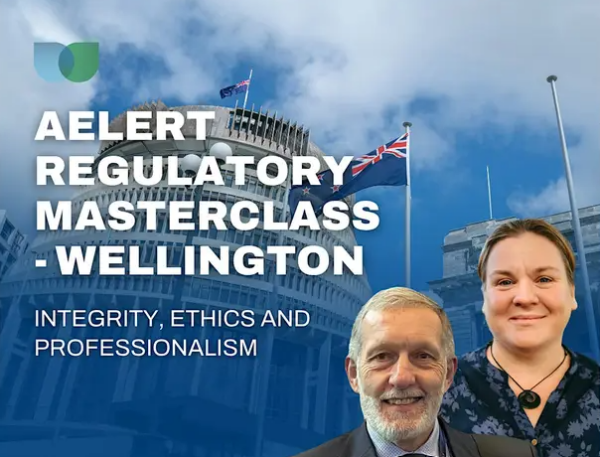
Masterclass on regulatory integrity, ethics and professionalism
Australasian Environmental Law Enforcement and Regulators neTwork (AELERT) is bringing their masterclass session on Regulatory Integrity, Ethics and Professionalism to Wellington.
Keith Manch and Dr Marie Doole, two of Aotearoa's respected voices on regulation will lead sessions on the fundamentals of good regulatory practice, management of the authorising environment, the operational areas where integrity risks concentrate, and the mechanics of regulatory capture and how to build resilience to and mitigate it.
When: 9am-3:30pm, Friday 30 October 2026
Where: Te Iho – Bowen House, 1 Bowen Street, Wellington. Hosted by the Ministry for Regulation.
If you're interested in receiving updates directly to your inbox, make sure you sign up to our mailing listopen_in_new
Keep up to date with our latest news by checking out this website, and follow us on LinkedInopen_in_new