Why more cones make for less safe roads
15 December 2025
Author: Dr Isabelle Sim, Lead Economic Advisor, Ministry for Regulation
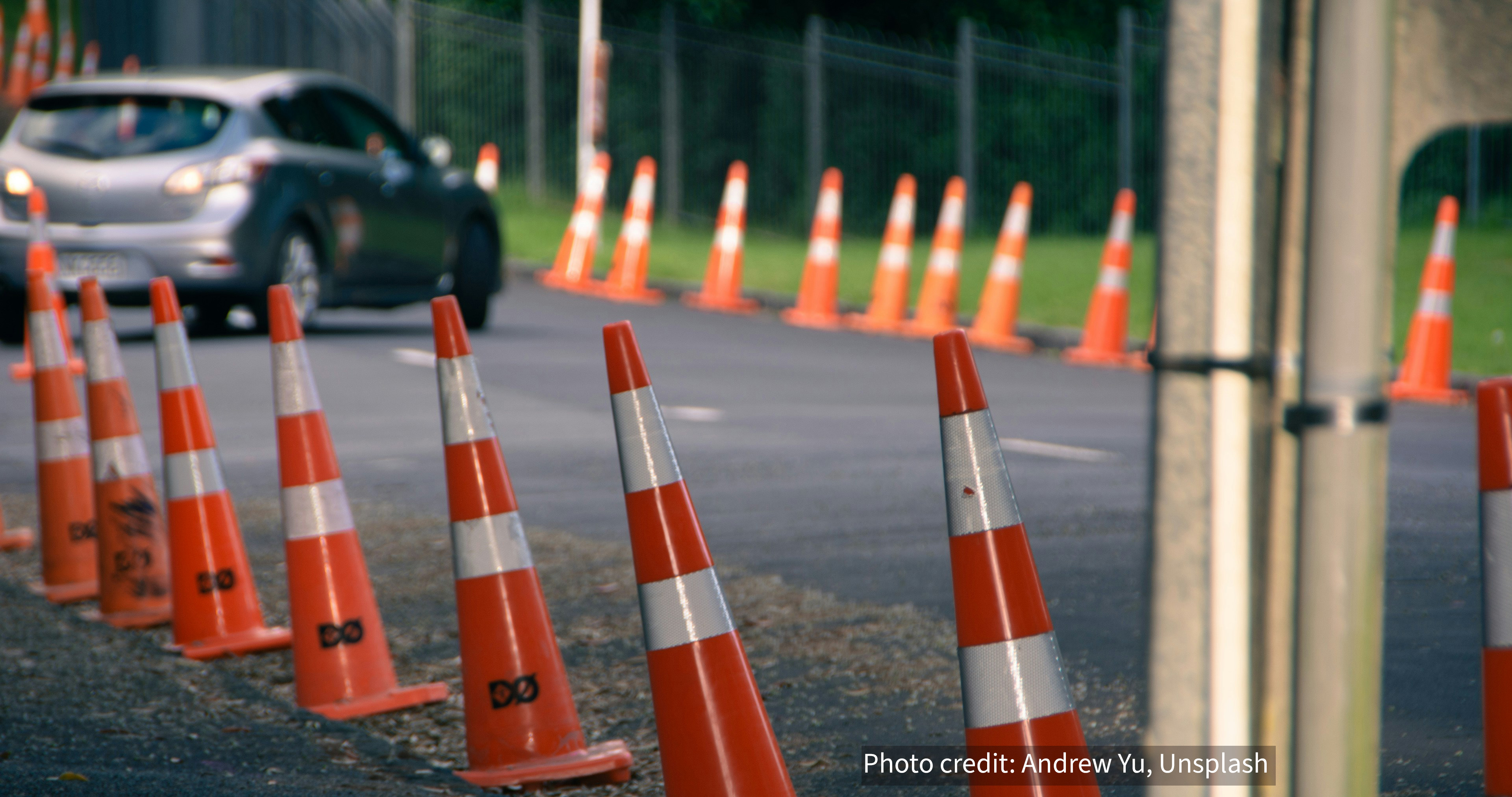
The road cone. This orange witch’s hat only wants to keep people safe yet has somehow become our national symbol of over-the-top red tape.
Can economics help us understand why this happened and how changing people’s incentives might provide a solution?
Roadworks are unavoidable if we are to build and upgrade infrastructure, and some road cones are necessary to keep workers and road users safe and keep traffic moving.
So, should we care about road cone numbers, or if they linger after the roadworks and risks are gone? Yes.
Every cone directly costs taxpayers or ratepayers but also imposes indirect costs on third parties by slowing traffic or blocking access to businesses. Economists call these indirect costs “externalities”.
For more than 20 years, temporary traffic management (TTM) in New Zealand has been guided by the Code of Practice for Temporary Traffic Management (COPTTM).
This 567-page tome lays out in painstaking (and painful) detail exactly how to use traffic cones, temporary speed limits, stop/gos, and other devices to manage risk and disruption on our roads.
Meeting these guidelines can require more cones than is necessary to manage the risks.
The code of practice is guidance, not regulation. However, many companies follow it overzealously, fearing legal risk. This fear is overblown. Since 1994, WorkSafe has brought only 24 prosecutions and four enforceable actions against companies for TTM failures.
In no case was the legal question whether “enough cones” had been used, only whether the risks had been addressed to the extent “reasonably practicable”.
Also, every cone, sign and barrier is an additional hazard. Every worker on a stop/go is themselves put at risk. The right number of cones balances addressing hazards against adding new ones.
Perhaps most concerning, unnecessary cones teach drivers to disregard temporary speed limits, drive through stop/gos, and abuse workers. Excessive cones and poor driver behaviour reinforce each other.
Recognising the problems with the code of practice, NZ Transport Agency Waka Kotahi developed new guidance called the NZ Guide to Temporary Traffic Management (NZGTTM). This replacement for COPTTM expects the specific hazards of each worksite to be identified and addressed.
It could reduce temporary traffic management costs substantially, but only if changes go beyond a shift in language and a new box-ticking exercise.
So, if we addressed the problems caused by COPTTM, the legal fears, and driver aggression, would the “road cone problem” be solved?
No, because those who plan roadworks and cones don’t have the right incentives to reduce direct and indirect costs.
Consider a construction company planning road maintenance. Suppose one approach costs the company $100,000 more than an alternative, but it would reduce the impact on local businesses by $150,000.
It would be better for society, but the company sees it as making the bid less competitive. The council chooses the cheapest option, and society suffers an avoidable $50,000 loss.
Misaligned incentives also fuel the problem. The subcontractors know what traffic management is necessary and when it can be taken away, but the construction companies that hire them don’t.
Economists call this an “information asymmetry” – that is, where one side of an exchange knows more than the other, which creates a “principal-agent problem”.
The construction company can’t challenge the subcontractor on what is actually required, and it passes the full cost of traffic management onto the customer anyway.
Schemes that put the cost of disruption back on construction companies could force them to consider the externalities they cause and lead to more economically efficient choices.
However, such schemes involve tradeoffs, and careful policy design would be required to ensure the benefits outweigh the costs.
While these incentive problems remain, road cones will keep enraging drivers and costing the economy. We may never reach a cone-free nirvana, but perhaps if we get the incentives right we can reduce them to a tolerable level.
In the meantime, remember that if you find yourself fuming at roadworks and abusing roadworkers who are just doing their jobs, you’re adding to the problem.
This article was first published in The Post, 16 November 2025open_in_new.